
NAPO
CARCAR
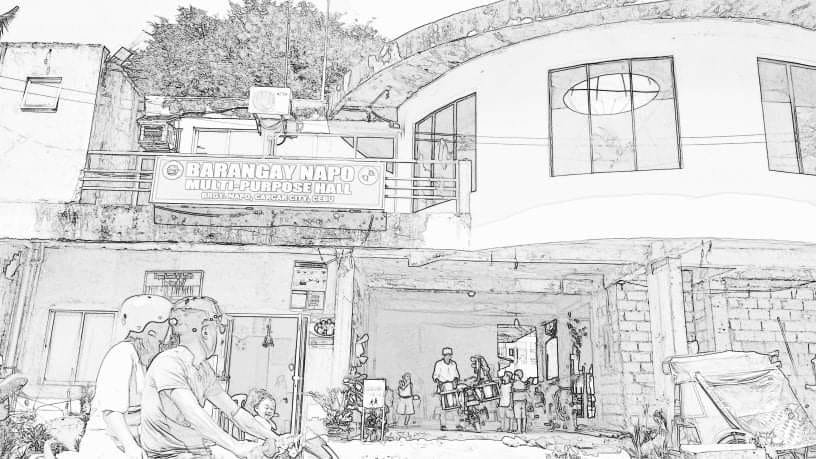
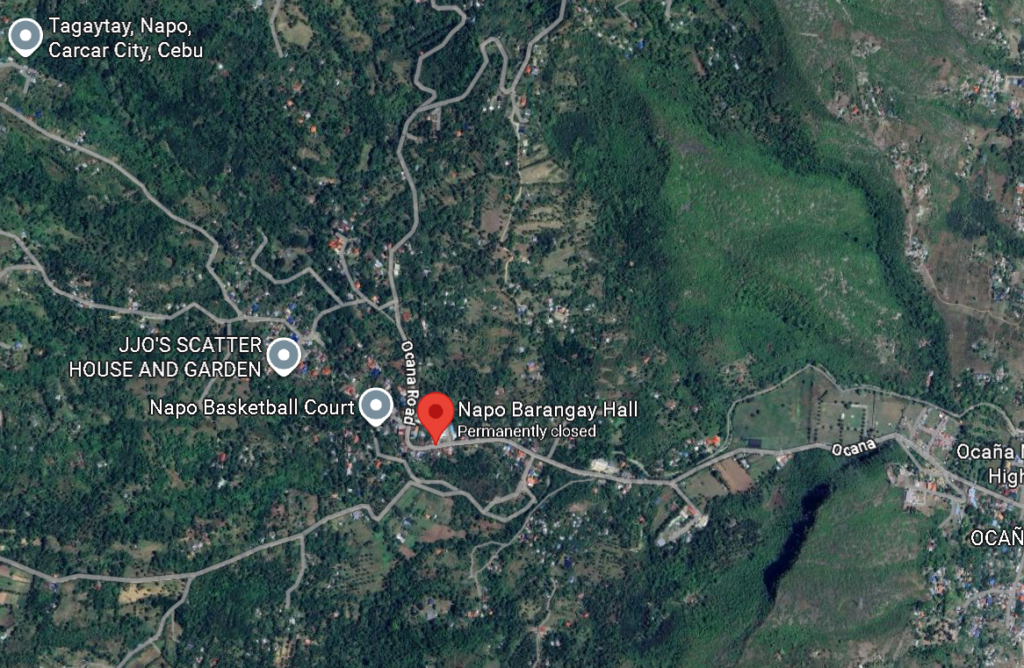
BARANGAY INFORMATION
AGE DISTRIBUTION
The population of Napo is divided into three key groups. Young dependents (aged 14 and below) account for 34.48% (2,216) of the total. The economically active population (those aged 15 to 64 who form the actual or potential workforce) comprises 59.64% (3,833) of the total. Finally, senior citizens (65 and over) represent the remaining 5.88% (378).
These figures result in an Age Dependency Ratio of 68 dependents for every 100 working-age individuals (consisting of 58 youth and 10 seniors). Additionally, the median age is 23, indicating that half the population is younger than 23, while the other half is older.
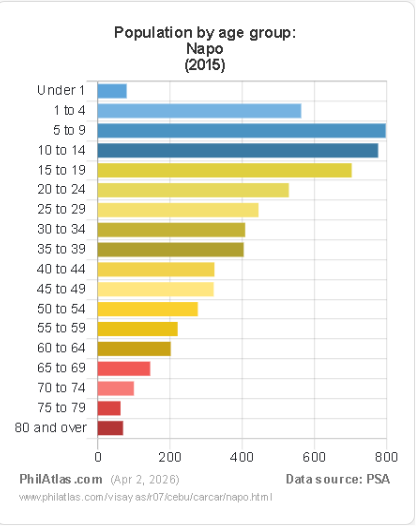
POPULATION BY AGE GROUP
According to the 2015 Census, the age group with the highest population in Napo is 5 to 9, with 797 individuals. Conversely, the age group with the lowest population is 75 to 79, with 63 individuals.
POPULATION
The population of Barangay Napo is 7,224 residents, based on the 2020 Census of the Philippine Statistics Authority. This represents about 5.29% of the total population of Carcar City, which recorded 136,453 residents in the same census year. Barangay Napo is one of the fifteen barangays of Carcar City, Cebu, contributing to the city’s overall population and community development.
HOUSEHOLDS
The household population of Napo in the 2015 Census was 6,427 broken down into 1,438 households or an average of 4.47 members per household.
BRIEF HISTORY
Barangay Napo is one of the fifteen barangays of Carcar City in the province of Cebu, located in the Central Visayas region of the Philippines. Known as an upland barangay, Napo is recognized for its peaceful rural landscape, thriving agricultural areas, and rich historical significance.
Barangay Napo holds an important place in Cebu’s archaeological history. Ancient burial sites dating back to approximately 6700–3000 BC, during the Neolithic period, were discovered in Napo and the nearby area of Ocana. These findings are considered among the earliest evidence of human settlement in Cebu. The excavations were led by archaeologist Rosa Tenazans and were later confirmed by American archaeologist John Peterson, revealing that the area surrounding Napo has a prehistoric history that spans thousands of years.
Life in Barangay Napo reflects a strong sense of community and rural tradition. Residents actively engage in farming and agriculture, community gardening, local cultural celebrations, youth workshops, and heritage-related activities. These practices strengthen the close social ties and cultural traditions that define the community.
Napo is also closely connected to Carcar City’s well-known food culture, particularly its famous lechon (roasted pig). Community festivals and gatherings often center around food and shared heritage, with lechon symbolizing celebration, unity, and the vibrant identity of the people of Carcar.